Foundations of Investing in Japan
Why Foreign Investors Choose Japan’s Real Estate Market
Japan stands out as one of the most secure and transparent real estate markets in Asia. For foreign investors, it offers both peace of mind and long-term opportunity.
Stability & Legal Protection: Japan has one of the world’s most reliable legal systems, ensuring clear ownership rights and contract enforcement.
No Ownership Restrictions: Unlike some countries, Japan places no limits on foreign buyers—whether purchasing land or buildings.
Transparency: Market data such as 公示地価 (official land price) and 基準地価 (benchmark land price) are publicly available, helping investors make informed decisions.
Reliable Rental Integrity: Japanese tenants are known for honoring contracts and timely rent payments, lowering risk for landlords.
For foreign investors, Japan combines cultural richness with financial reliability—making it a market worth considering for both stability and growth.
What Foreigners Need to Know About Japan’s Rental Market
Japan’s rental market is unique, and understanding its culture and systems is key to successful investing.
Tenant Culture: Tenants in Japan typically respect property and have high payment reliability—rent default is rare.
Popular Property Types: Small-to-mid-sized condominiums in city centers (like Tokyo’s 23 wards) are the most in demand.
Property Management: Foreign investors often rely on professional management companies, who handle tenant placement, rent collection, and maintenance.
Vacancy Risk: Smaller units near stations tend to have lower vacancy rates compared to larger or suburban properties.
By knowing the rental culture and working with trusted property managers, foreign investors can generate stable and worry-free income in Japan.

Understanding Income Capitalization in Japanese Real Estate
The income capitalization approach is one of the most common ways to evaluate investment property in Japan. Instead of focusing only on purchase price, it looks at a property’s ability to generate income.
Formula:
Property Value = Net Operating Income (NOI) ÷ Capitalization Rate (Cap Rate)
Breakdown of Components
Net Operating Income (NOI):
This is the property's annual income before considering mortgage payments, depreciation, or taxes. It's calculated as:
NOI = Gross Income - Operating Expenses
Capitalization Rate (Cap Rate):
This is the rate of return an investor would expect on a property. It is calculated as:
Cap Rate = NOI ÷ Current Market Value
Example:
If a Tokyo apartment generates ¥1,200,000 in annual NOI and the market cap rate is 4%, the estimated property value is:
¥1,200,000 ÷ 0.04 = ¥30,000,000
Why It Matters:
This method helps investors compare opportunities fairly and understand whether the asking price aligns with rental potential.
By applying income capitalization, investors can evaluate properties not just by price, but by their long-term earning power.

How Japan’s Earthquake-Resistant Building Standards Protect Your Investment
Earthquakes are a reality in Japan, but strict building codes make properties remarkably resilient. For investors, this means long-term security and tenant confidence.
Post-1981 Building Standard Law (新耐震基準) – modern earthquake-resistant design that is able to withstand JMA 6+ to 7.
Periodic Inspections – condo associations ensure ongoing compliance and safety.
Materials & Methods – reinforced concrete, seismic damping, and flexible structures.
Tenant Reassurance – earthquake readiness contributes to high renter integrity and stability.
Investor Confidence – properties built under new standards maintain stronger long-term value.
Japan’s global reputation for safety and resilience adds peace of mind for foreign investors.
Taxes and Ongoing Costs of Owning Property in Japan
Understanding costs upfront ensures your investment stays profitable and free of surprises. Japan’s tax system is straightforward once broken down into categories.
Annual Fixed Asset Tax – based on property and land value.
City Planning Tax – small additional municipal levy.
Rental Income Tax – how income is taxed for non-residents, plus allowable deductions.
Management Fees & Repair Reserve (修繕積立金) – monthly condo costs that maintain building quality.
Insurance & Maintenance – fire/earthquake insurance and upkeep costs.
With proper planning, these costs are predictable and can be factored into your yield calculations.

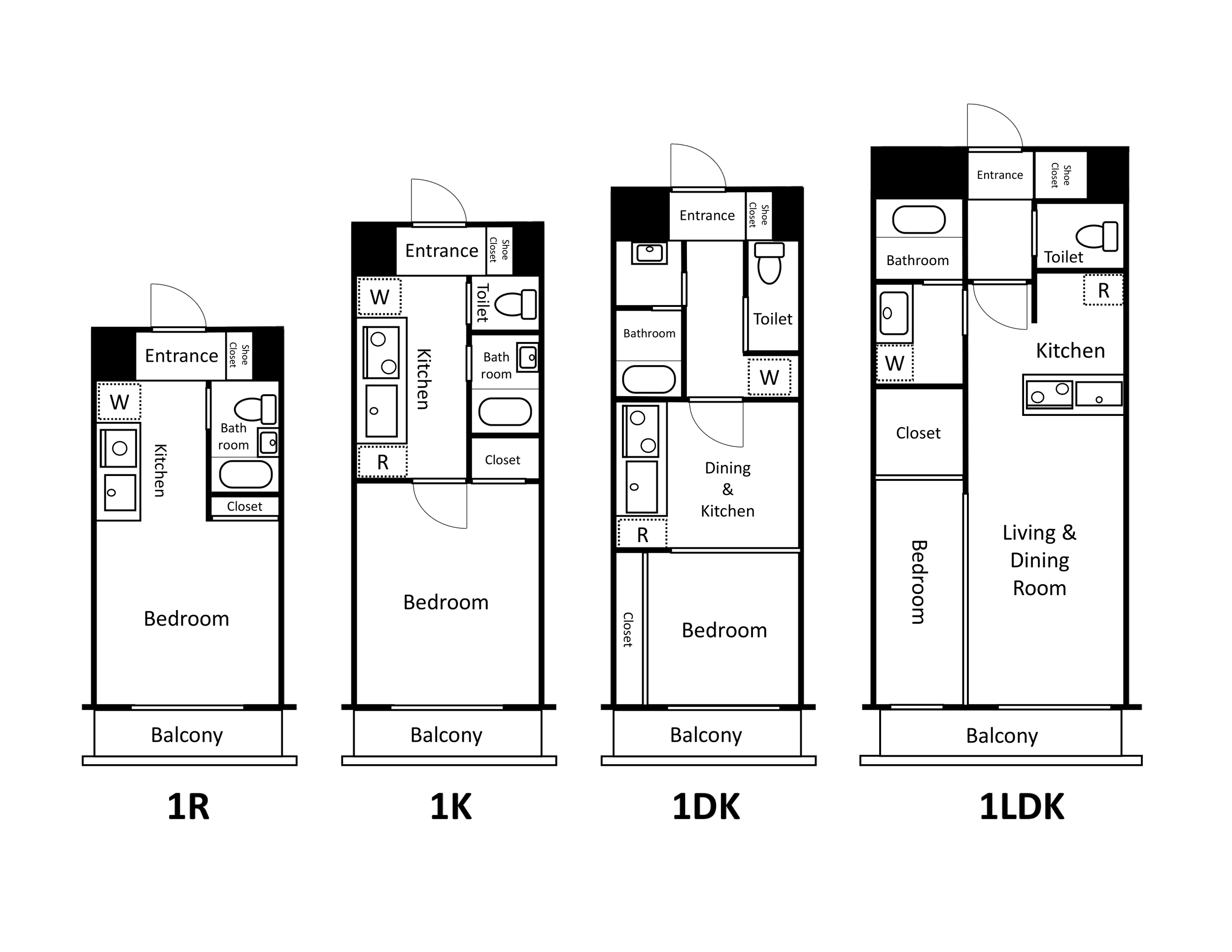
Understanding The Japanese Property Layout
Japanese apartments and houses often use unique layout notations (like 1K or 2LDK) that can confuse foreign investors. Understanding them helps you better assess size, livability, and rental appeal.
Room notation system – What “L,” “D,” “K” mean (Living, Dining, Kitchen) and how numbers represent bedrooms.
Typical layouts – Common styles for studios, family apartments, and single-unit homes.
Cultural design features – Tatami rooms, compact bathrooms, genkan (entrance space).
Investment impact – Which layouts rent fastest and retain value in urban vs. suburban areas.
Once you learn the simple notation, Japanese layouts become easy to understand — and MPATHIAN guides you in choosing the layouts most attractive to renters.
Finding Peace of Mind in Uncertain Times
Inflation feels like watching your savings quietly lose value. Prices go up, but your money doesn’t stretch as far — and that creates worry about the future.
At MPATHIAN , we’ve been in that same place. That’s why we look at Japanese real estate differently: not just as numbers on a chart, but as a path to stability and reassurance. In cities like Tokyo, Osaka, and Fukuoka, property values and rental demand have consistently grown — often faster than inflation in both Japan and the U.S.
For investors, that means more than financial gain. It means knowing your wealth is protected, growing, and giving you peace of mind, even when the cost of living rises around you.
Protects your savings → property values in Tokyo, Osaka, and Fukuoka often grow faster than inflation.
Steady income flow → reliable rental demand, even during economic shifts.
Stability in uncertainty → Japan’s market is guided by strict laws, safety codes, and long-term resilience.
Accessible entry points → Fukuoka offers affordable opportunities with strong growth potential.
A global hedge → outperforms inflation not only in Japan, but often compared to the U.S. as well.
Peace of mind, not just profit → knowing your wealth is safe while the world changes around you.
In the end, Japanese real estate offers something rare: growth that beats inflation, steady rental income that provides stability even in uncertain times, and above all, peace of mind knowing your wealth is secure. Investing in Tokyo, Osaka, and Fukuoka isn’t just about returns — it’s about creating a foundation of confidence and security for your future.

How Transit Access Impacts Property Investment in Japan
Japan’s extensive train and subway network shapes property prices and rental demand more than almost any other factor. Understanding transit access is key to smart investing.
1. The Value of Proximity
Properties within a 5–10 minute walk to a station command higher rents and lower vacancy.
Each extra 5 minutes of walking distance usually reduces demand, especially in urban centers.
In Tokyo/Osaka, station distance often matters more than square footage.
2. Major Line Premiums
JR Yamanote Line (Tokyo): Properties near its loop hold premium value due to direct access to key business districts.
Subway hubs (e.g., Shinjuku, Umeda, Tenjin): Attract strong rental demand and retail opportunities.
Express vs. local train stops: Apartments near express stops often rent faster.
3. Tenant Lifestyles & Preferences
Young professionals prioritize convenience to business districts.
Families often choose suburban stations with direct commutes and more space.
University students seek locations near campuses with one-line access.
4. Long-Term Redevelopment Impact
New station openings or planned line extensions can significantly increase property value.
Redevelopment zones (e.g., around Shinagawa, Osaka Umeda) show strong appreciation linked to transit upgrades.
Even if you’re unfamiliar with Japan’s complex transit maps, Mpathian simplifies the process by analyzing which stations and lines matter most for your goals, helping you invest with confidence.
Property Selection
Offer & Contract
Settlement
Due Diligence
Ownership Handover
& Management Setup
Navigating the Purchase Process in Japan as a Foreigner
Buying real estate in Japan may feel intimidating, but the process is structured, transparent, and surprisingly accessible for foreigners. With the right guidance, you don’t even need to travel to Japan to complete the purchase.
Step 1: Property Selection – Choosing based on location, budget, and rental yield potential. JPY¥1,000,000 (approximately USD$6,800) will be required to reserve the chosen property.
Step 2: Offer & Contract – Signing the purchase agreement with translation support.
Step 3: Due Diligence – A licensed judicial scrivener (司法書士) verifies the buyer identity, property title, registration, and legal compliance. This step also covers property inspection and financial checks to ensure the investment is fully secure.
Step 4: Settlement – Final payment, tax/fee settlement, and registration at the Legal Affairs Bureau.
Step 5: Handover & Management Setup – setting up property management to ensure hassle-free rental income.
The system is highly regulated and protects both buyer and seller, making it a safe process for foreign investors.
Traditional Method vs. MPATHIAN Method
The traditional process is fragmented and intimidating. The Mpathian method makes it as smooth and reassuring as shopping online, with transparency at every step.
| Stage | Traditional Process | The Mpathian Method |
|---|---|---|
| Property Search | Requires browsing multiple Japanese-only websites, contacting agents individually. | Curated list of properties pre-screened for foreign investors with clear yield data, translated documents, and comparisons. |
| Language Barrier | Contracts, disclosures, and communications are in Japanese, often requiring expensive translators. | All documents translated and explained in plain English (with cultural context) so you know exactly what you’re signing. |
| Agent Trust | Hard to know if the agent is acting in your best interest; local buyers may be prioritized. | Mpathian acts as your guide—transparent recommendations aligned to your goals, not inventory pressure. |
| Due Diligence | Buyer must independently find legal, tax, and inspection services—confusing from overseas. | Streamlined coordination with trusted legal, tax, and property-management partners experienced with foreign clients. |
| Purchase & Closing | May require multiple in-person trips; cross-border scheduling is complex. | Remote-friendly process—complete everything online if you wish; optional travel only if desired. |
| After Purchase | Left to figure out property management and rental setup on your own. | Mpathian ensures trusted property management is in place from day one so income starts smoothly. |
On mobile: swipe left/right to view the full table.
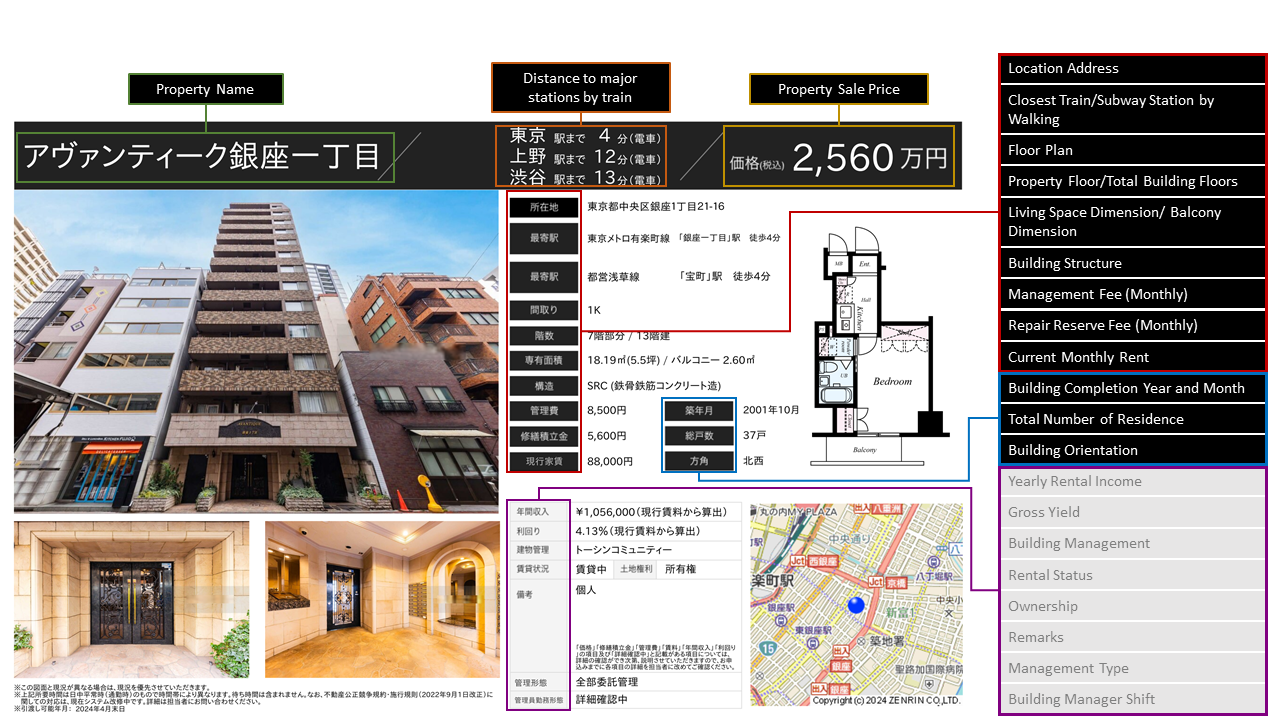
The Property Listing Information Explained
Japanese listings contain technical terms and abbreviations that are not always clear to foreigners. Breaking them down ensures you can interpret data accurately before making decisions.
Price & size metrics – Tsubo, square meters, land vs. building area.
Floor level & orientation – Why south-facing and upper floors are often more valuable.
Age of building – How to read completion dates and their importance for earthquake standards.
Fees – Management fee (管理費) and repair reserve (修繕積立金).
Other indicators – Leasehold vs. freehold, zoning details, proximity to train stations.
With clear explanations, you’ll never feel lost in the fine print — Mpathian ensures you fully understand what each listing detail means for your investment.